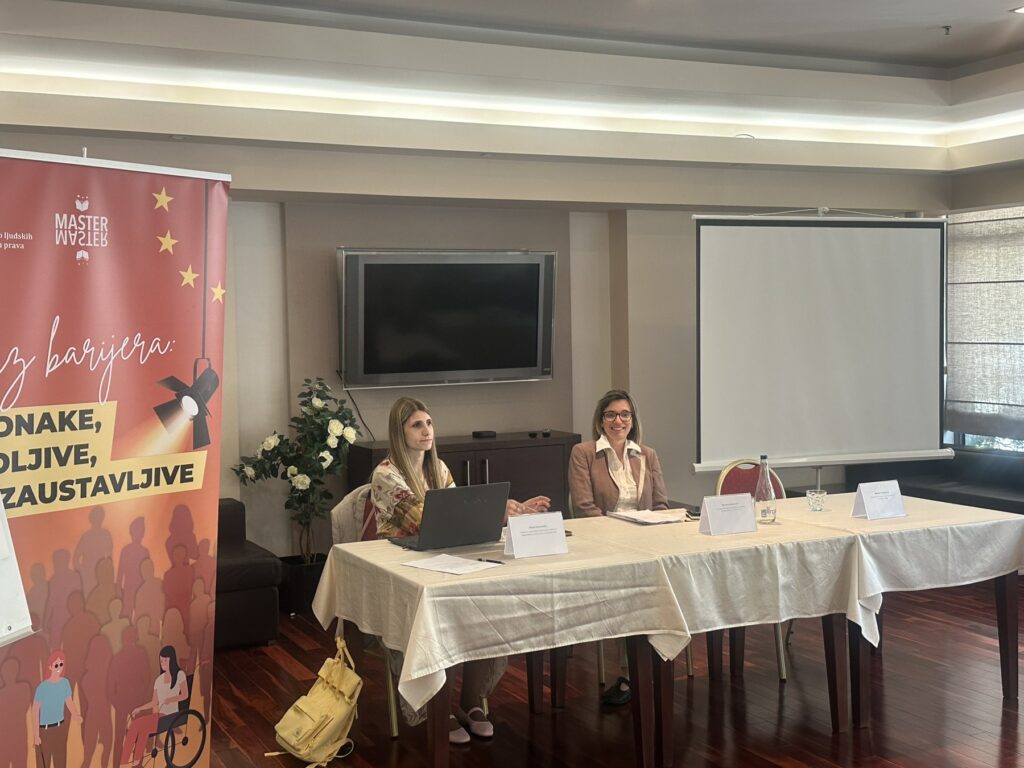
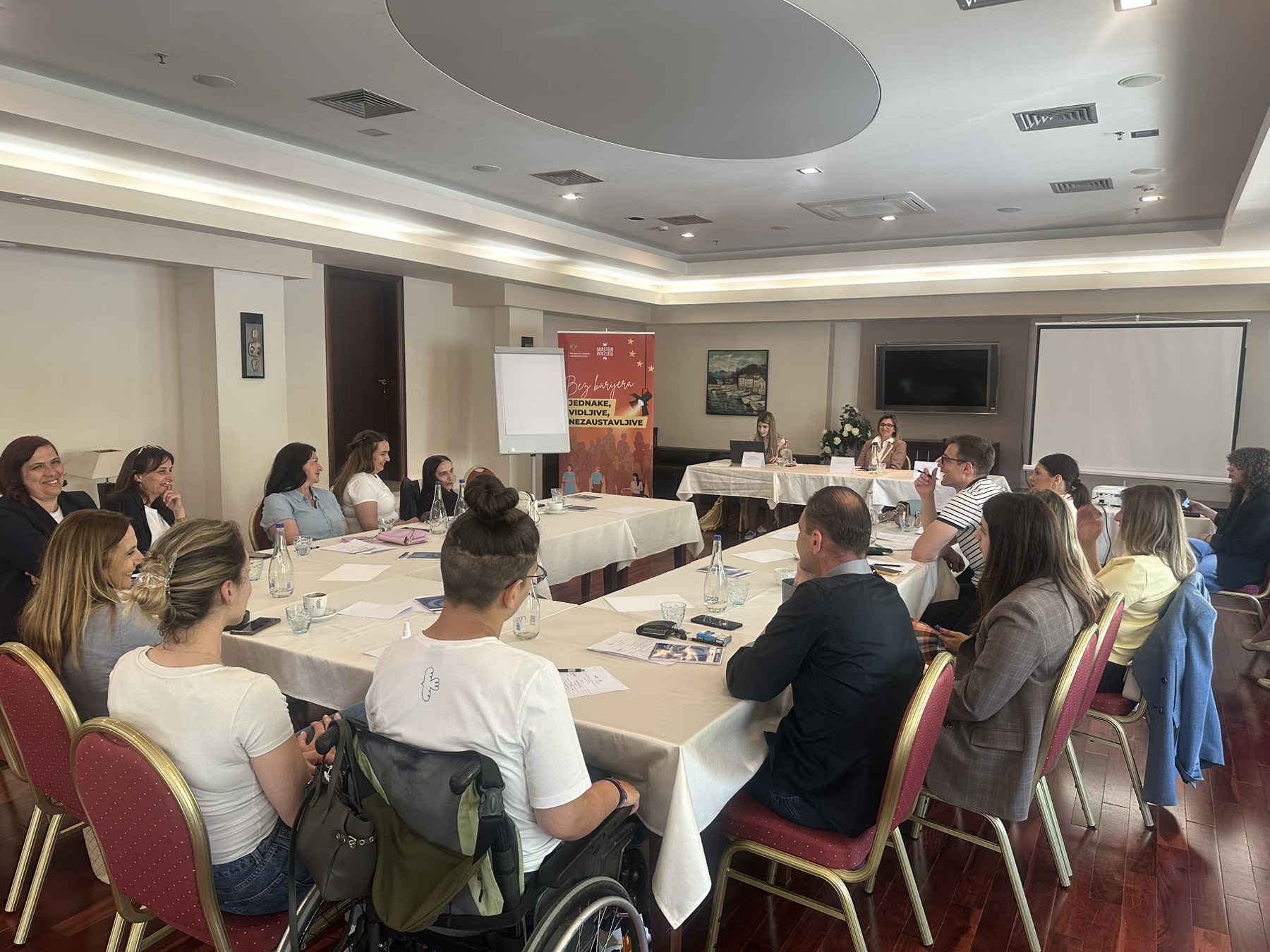
The Network for European Policies – MASTER successfully implemented the two-day training “Without Barriers: Equal, Visible, Unstoppable”, held on 27 and 28 April at the Monte Casa Hotel in Petrovac. The training gathered 25 participants with the aim of strengthening knowledge on the rights of persons with disabilities, with a special focus on the position of women and girls with disabilities.
The training was opened by M.Sc. Irena Rakočević, Director General of the Directorate for the Protection and Equality of Persons with Disabilities, and M.Sc. Andrea Popović, Executive Director of the Network for European Policies – MASTER, who highlighted the importance of strengthening inclusive policies, equal opportunities and continuous institutional support for persons with disabilities.
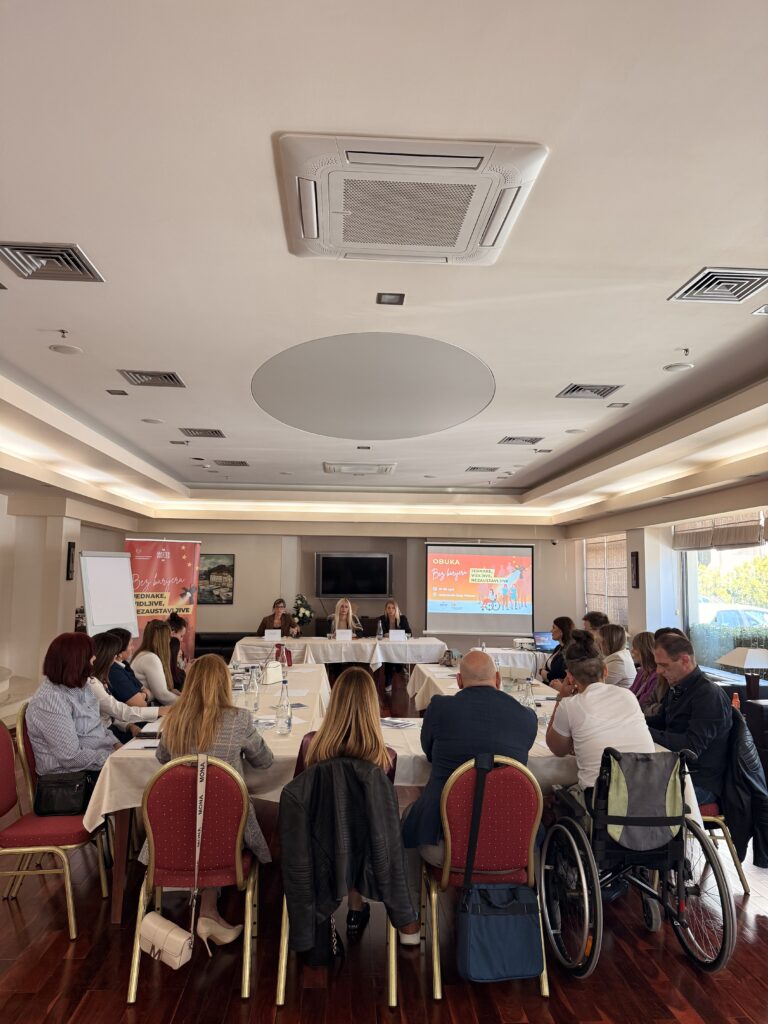
During the first day of the training, through sessions led by Marijeta Mojašević, an expert in the rights of persons with disabilities and social cohesion, participants had the opportunity to learn about the importance of social cohesion and inclusion, as well as to deepen their understanding of the experiences of women with disabilities as a basis for recognizing multiple discrimination. Special focus was placed on identifying key systemic and social barriers, as well as on the impact of gender identities on access to rights and services.
On the second day of the training, attention was focused on institutional responses to multiple discrimination, the analysis of existing practices and the identification of shortcomings in the system, as well as on improving a multisectoral approach to preventing discrimination. Through interactive work and discussion, participants developed recommendations for improving cooperation between institutions and enhancing access to services.
The final segment of the training was led by Dunja Samardžić, a lawyer and activist engaged in the protection and promotion of the rights of persons with disabilities. Together with the participants, she discussed key challenges in exercising rights in practice, including the availability of support services, accessibility and legal protection. Special emphasis was placed on defining concrete measures and next steps to improve the position of persons with disabilities.
Through interactive work, exchange of experiences and group activities, the participants contributed to the creation of recommendations that will serve as a basis for improving policies and practices in this field.
By implementing this training, a significant step was taken towards strengthening the capacities of professionals and improving inclusive policies, with the aim of building a society of equal opportunities for all.
The training was implemented within the framework of a project funded by the Ministry of Human and Minority Rights.
MASTER TEAM