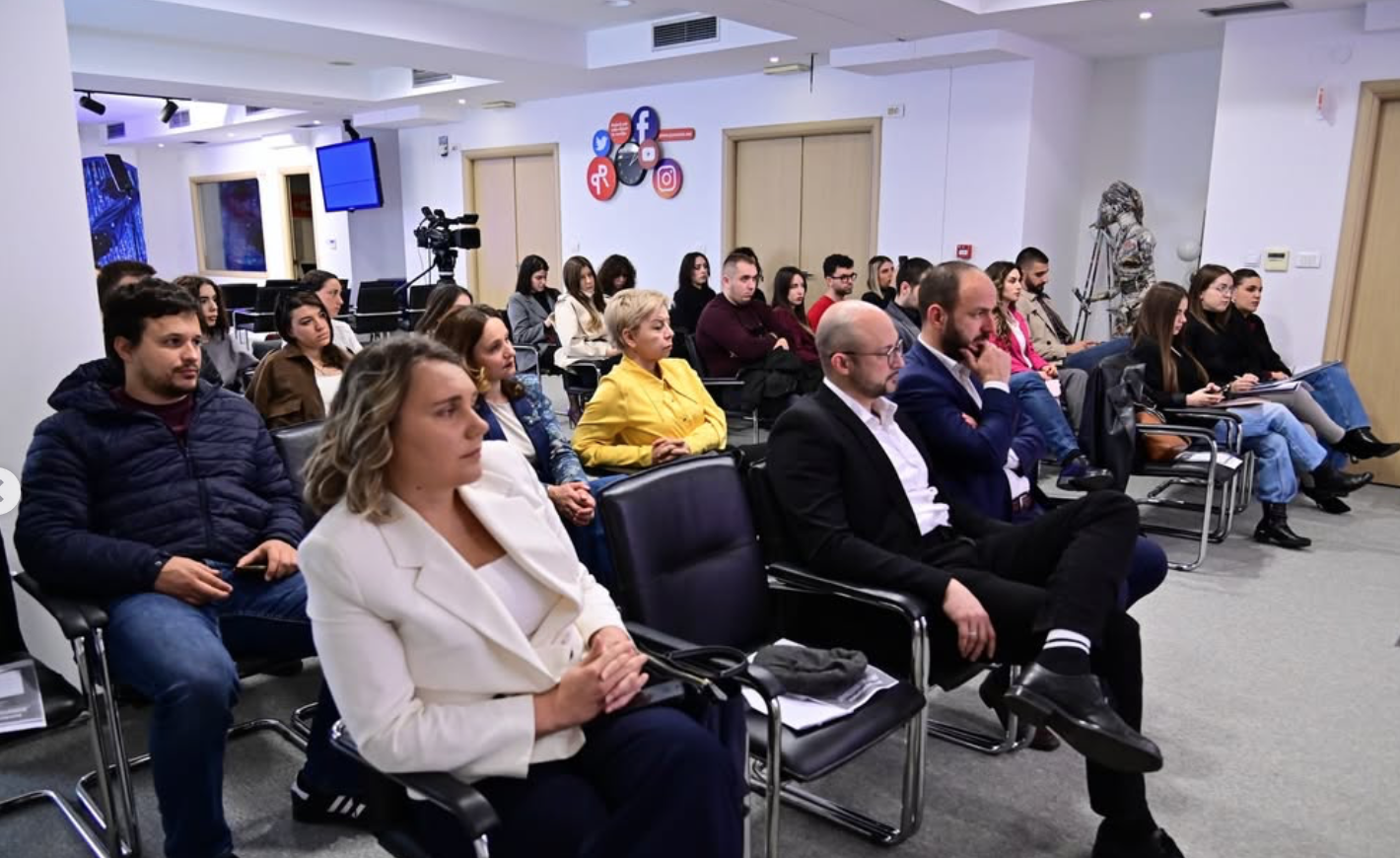
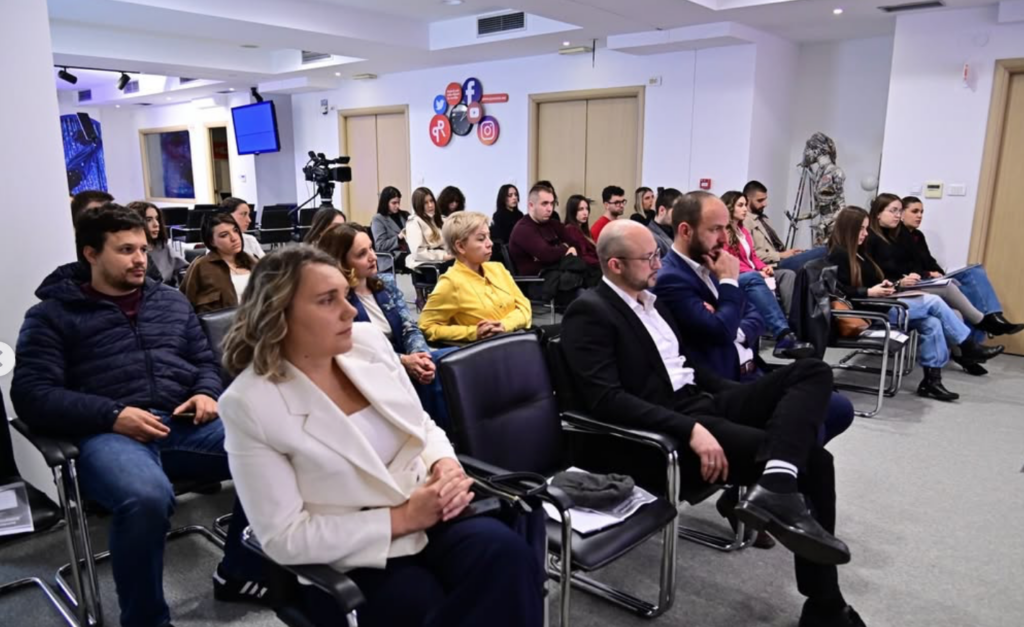
The European Policy Network – MASTER held a final event on March 31, 2026, in Podgorica as part of the project “Corruption in Education,” where key research findings and recommendations for improving the education system in Montenegro were presented.
The event was opened with introductory remarks by Executive Director Andrea Popović, who emphasized that the three policy papers developed within the project do not represent isolated issues, but rather point to deeper, structural weaknesses of the system. “This is not about three separate topics, but three case studies that together reflect the state of the education system and the relationship of institutions toward the public interest,” Popović stated.
During the event, findings from the following publications were presented:
- Who and How Recognizes Diplomas?
- Is School in Nature Really School in Nature?
- How Are School Principals Appointed?
The research highlights concerning trends—up to 80% of citizens believe that fake diplomas are used for employment, while around 60% report knowing someone with a falsified diploma. At the same time, only one quarter of parents believe that “schools in nature” have real educational value, while three quarters of respondents assess that the selection of school principals is strongly influenced by politics.
Popović also pointed to concrete systemic challenges, noting that out of more than 8,600 requests for diploma recognition in 2024, just over 30% were processed, despite a legal deadline of 30 days. As she stressed, slow procedures and selective implementation of rules create uncertainty and further undermine public trust in institutions.
MASTER representative Tara Serhatlić emphasized that the findings are based on direct citizen experiences and detailed data analysis, clearly identifying the system’s key “bottlenecks.” “These documents cannot solve all problems, but they can clearly show where the key shortcomings are and how to improve them,” Serhatlić stated, highlighting the need for greater transparency, digitalization, and stronger oversight across all segments of education.
During the event, key segments of podcast episodes produced within the project were also presented, helping to bring the research findings closer to the wider public.
The final part of the event featured a panel discussion with representatives of civil society and the expert community—Vuk Maraš, Andrijana Radović, and Vesko Pejak. The panelists agreed that issues such as fake diplomas, dysfunctional procedures, and political influence are not isolated incidents, but systemic patterns that require a comprehensive response.
“If there are no serious consequences for these phenomena, it is unrealistic to expect things to change on their own,” Maraš warned, while Radović pointed out that the issue of fake diplomas has, to a large extent, become socially normalized. Pejak further emphasized the scale of the problem, highlighting years of neglect and serious consequences for the public sector.
The conclusion of the event is that a formal framework exists, but its consistent and substantive implementation is lacking. Key recommendations include increasing transparency in processes, digitalizing and accelerating procedures, strengthening diploma verification, introducing clear standards for organizing schools in nature, and depoliticizing the selection of school principals.
Without such changes, it was concluded, there is a serious risk that the education system will continue to function as a closed and non-transparent space, disconnected from the needs of citizens and the public interest.
The project “Corruption in Education” is implemented by the European Policy Network – MASTER with the support of BIRN and the Civic Alliance.